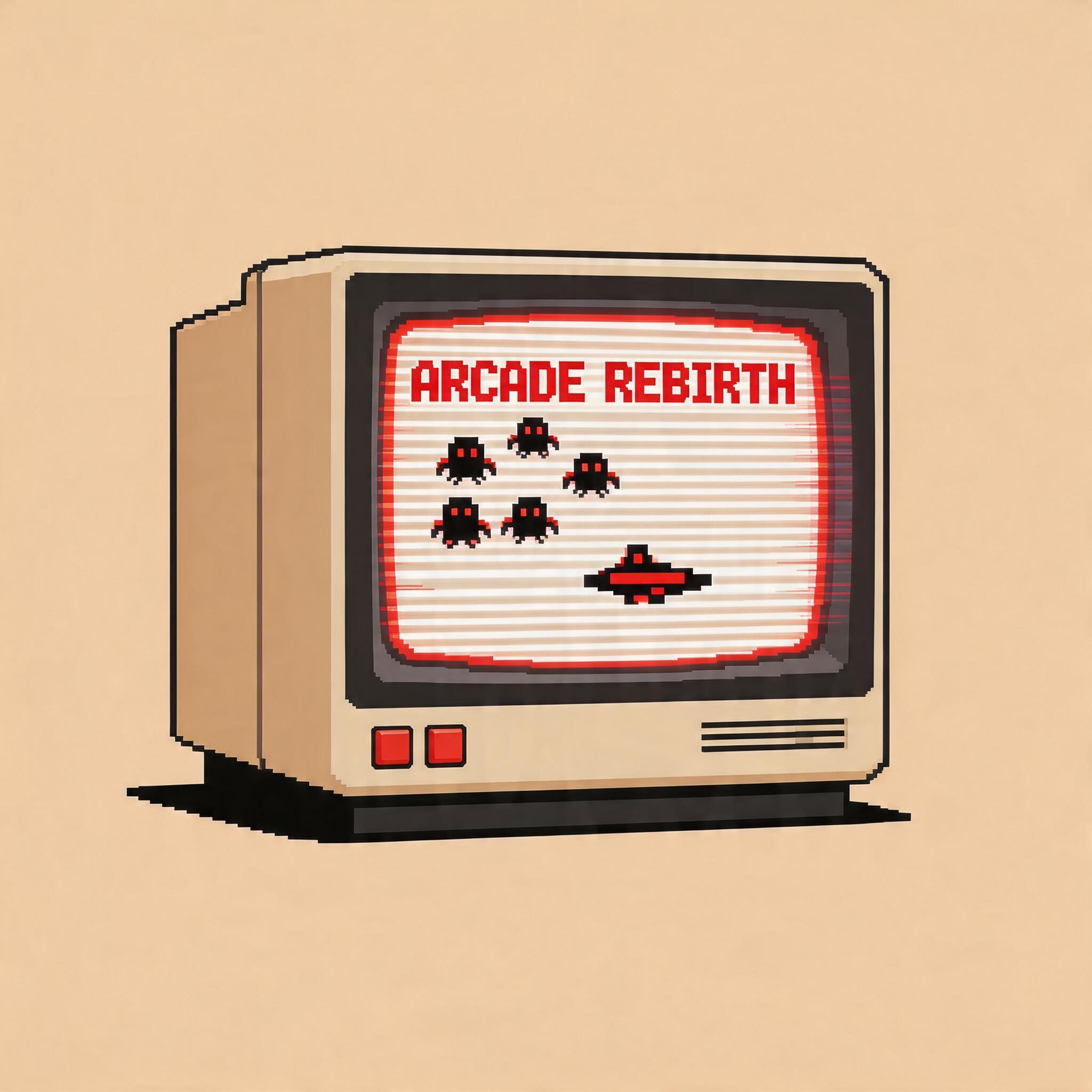
Nostalgia is a powerful aesthetic currency. In an era where AAA games boast photorealistic rendering and terabytes of high-fidelity assets, a massive counter-culture movement has taken root in web gaming: the intentional regression to 8-bit and 16-bit aesthetics. This rebirth of the retro arcade is not merely a lack of resources; it is a deliberate stylistic choice that evokes a specific emotional resonance.
Pixel-Perfect Rendering on Modern Displays
Recreating the look of a 1980s arcade cabinet on a 4K Retina display requires significant technical effort. Modern browsers are designed to anti-alias and smooth out low-resolution images, which ruins crisp pixel art. Developers must explicitly instruct the canvas context to disable image smoothing (imageSmoothingEnabled = false) and use CSS properties like image-rendering: pixelated.
Furthermore, true retro design adheres to strict constraints. Instead of utilizing millions of colors, designers limit their palettes to 16 or 32 colors, emulating the hardware limitations of the NES or Sega Genesis. This constraint breeds creativity, forcing artists to convey volume, lighting, and texture through meticulous pixel placement rather than gradient brushes.
"We aren't trying to recreate what old games actually looked like; we are trying to recreate what you *remember* they looked like in your childhood."
The Magic of CRT Shaders
Playing a pixel art game on a razor-sharp LCD monitor often feels sterile. The original arcade monitors were Cathode-Ray Tubes (CRTs), which had inherent physical flaws that contributed to the art style. The glowing phosphors blurred the pixels slightly, blending dithered patterns into new colors and creating a distinct scanline effect.
Simulating the Past via WebGL
To capture this warmth, developers use WebGL fragment shaders to apply post-processing effects over the entire canvas:
- Scanlines: Drawing subtle horizontal black lines across the screen to mimic the electron beam.
- Chromatic Aberration: Slightly separating the red, green, and blue color channels at the edges of the screen to simulate a curved glass lens.
- Phosphor Glow: Adding a slight bloom effect to bright pixels to mimic the bleeding of light on a CRT surface.
Chiptune Synthesis and Web Audio API
The auditory landscape is just as crucial as the visual. Instead of using MP3 recordings of orchestras, retro web games use the Web Audio API to synthesize sound in real-time, just like the original sound chips (like the SID chip or the Yamaha YM2612). By manipulating basic waveforms—square, sawtooth, triangle, and noise—developers construct pulsing, melodic chiptune tracks that trigger deep nostalgic responses, completing the illusion of the digital time machine. It is a testament to the fact that great gameplay loop never ages; it merely waits to be rediscovered.